Showing posts with label Denzel Washington. Show all posts

Thursday, December 2, 2021

Philadelphia

Philadelphia
Director: Jonathan Demme
Cast: Tom Hanks, Denzel Washington, Antonio Banderas, Jason Robards, Mary Steenburgen, Joanne Woodward, 
Released: December 22, 1993

Oscar nominations:

Best Actor - Tom Hanks (won)
Best Makeup (lost to Mrs. Doubtfire)
Best Original Song - "Streets of Philadelphia" by Bruce Springsteen (won)
Best Original song - "Philadelphia by Neil Young (I don't even remember this song; I'm surprised it didn't split the votes). 
Best Original Screenplay - Ron Nyswaner (lost to Jane Campion for The Piano)


Philadelphia is definitely a movie of its time. AIDS seemed to be the hot button issue of the '90s (especially the early '90s) and once the 21st century hit, you never really heard anything about it ever again. 

The movie stars a young Tom Hanks (36 at the time) and a young Denzel Washington (38 at the time). Hanks plays Andrew Beckett who has just been made a senior associate at Wyant, Wheeler, Hellerman, Tetlow, and Brown, the law firm he works at in Philadelphia. (You probably could have guessed the city he lived and worked!) He's gay, but he keeps that information under wraps from his employers (and we'll see why much later in the film (spoiler alert: he works with a bunch of homophobic pricks)). Washington plays personal injury lawyer Joe Miller. We see one of his commercials played during the film and I couldn't help but think he should have used the tagline, "Better Know Joe!" But, of course, being a huge Breaking Bad fan, I couldn't help but think of Saul Goodman when I saw this. Joe's wife is about to have a baby girl.

Right after Andrew's been made a senior associate, one of the partners notices a lesion on his forehead and Andrew tells him he got whacked with a racketball. Nine days later he has more lesions on his face and by this time he has called in sick for four days and does his work from home. A friend of his (played by Chandra Wilson aka Dr. Bailey from Grey's Anatomy) puts make up on his lesions so they aren't as noticeable. The bronzer is called "Tahitan bronze" and Andrew says they're going to think he was on a cruise because he looks tan. 
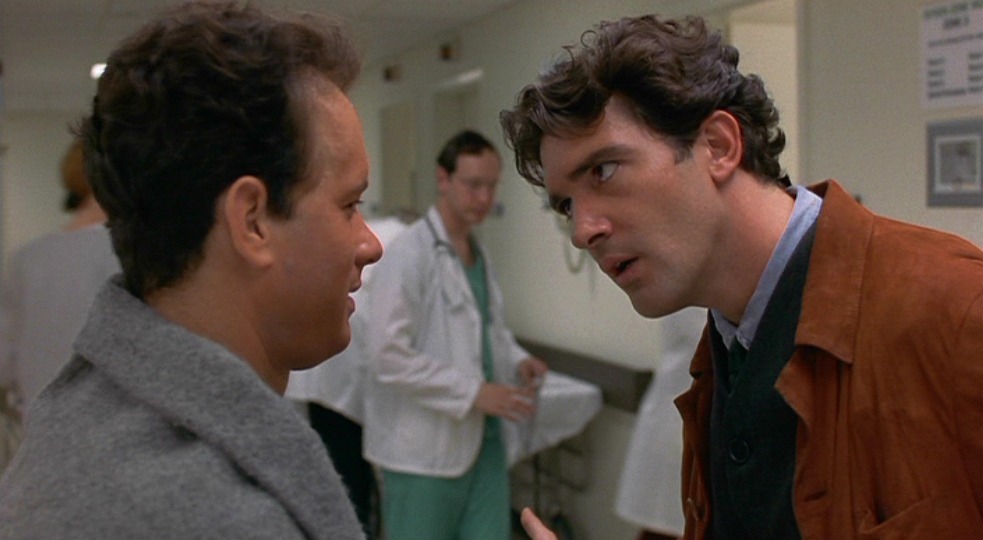
He gets a sharp pain in his stomach and tells his boyfriend, Miguel (Antonio Banderas), he needs to go to the hospital. It is there that he sees the TV commercial with Joe Miller. Long story short, while working from home, Andrew has been working on a super important file, but somehow it didn't get filed until the very last minute and he ends up being fired because of this. Or at least that's what the partners tell him why he's being let go, but Andrew believes he's being fired because they know he has AIDS. 

We see Andrew visit Joe Miller at his office, one week after Joe's daughter has been born. This is actually not the first time they've met before as we saw them together in the very first scene (although very briefly) where they worked on a case together. It was probably in the last year and it wasn't a huge case, but when Andrew reminds him of it, Joe immedietly remembers him and seems happy to see him as they shake hands, so you know they had a good rapport when they worked together. However, when Joe asks Andrew what happened to his face (he has noticeable lesions), he tells him he has AIDS and Joe quickly drops his hand away. He tells Andrew he is sorry to hear that, but you can tell he's uncomfortable. This uncomfortableness will continue when Andrew sits down and takes off his hat and Joe doesn't look pleased when Andrew places his hat on his desk and looks even more displeased when Andrew takes a wrapped cigar with "It's a Girl" engraved on it, then puts it back. Man, this guy would hate people touching his stuff during COVID! 

Andrew tells Joe he's been fired by his law firm and he plans on bringing a "wrongful termination suit against Charles Wheeler and his partners." He tells Joe they told him he was fired for misplacing an important file, but his story is that he worked on it and left a copy of it on his desk, but the next day it had vanished and there wasn't even a hard copy. All traces of it were gone from his computer, but at the last minute it was miraculously found. (Hmm, how convienent. Sounds like a conspiracy theorist would have fun with this one.) As he's telling Joe the story of how he was summoned into the partners' office, we see a scene of Andrew in the conference room where he's apologizing to the older gentlemen and tells them thank god it was found. One of the lawyers say, "This time. What about next time?" Andrew is then told that some people thinks he has an "attitude problem", which to me, seems to come out of nowhere because we never see any examples of this, and that some kind of "fogginess" has come over him. He is also told, "Your place in the future of this firm is no longer secure. We feel it isn't fair to keep you here when your prospects are limited." Andrew asks if they thought he had an attitude problem, why did they give him that important case in the first place? Heh, that does sound like something somebody with an attitude would say! Also, I'm guessing because they didn't know he had AIDS at that time! Joe confirms with him that he was concealing his illness from the partners. He asks Andrew, "Didn't you have an obligation to tell your employer you had this dreaded, deadly, infectious disease? Tell us how you really feel, Joe! Andrew replies, "That's not the point. From the day they hired me, to the day I was fired, I served my clients consistently, thoroughly, with absolute excellence. If they hadn't fired me, that's what I'd be doing today." Joe starts to see the light here: "And they don't want to fire you for having AIDS. So in spite of your brilliance, they make you look incompetent, thus the mysterious files." Andrew confirms this and says he was sabotaged. Joe asks him how many lawyers he went to before he came to him and Andrew tells him nine. It looks like Andrew will have to find an eleventh because Joe says he doesn't see a case here. This is absolutely insane that Joe says this because before Andrew arrived, we saw Joe talking to a guy who wants to sue the city for negligence because he fell into a hole that was clearly marked and blocked off. He asks Joe if he has a case and Joe says he does and takes the case! So you know he is lyyyyying!

Of course, it's clear why Joe doesn't want the case and even Andrew sees this. He tells Joe, "I have a case. If you don't want it for personal reasons..." and Joe confirms this is true and says he doesn't want the case. Andrew thanks him and leaves and that's that. At least for now. 
We see a close up of Andrew's face as an instrumental version of Streets of Philadelphia starts playing and I knew this was the moment that Tom Hanks had won his Oscar. I don't remember the 1993 Oscars (wait, even though this movie came out in '93, the Oscars where it won was held in '94, so I never know if I should refer to it as the '93 Oscars or the '94 Oscars...this is so unnecessarily complicated!); I don't think I even watched it, but I bet this was the scene they showed for his Oscar clip. That or the last scene he has with Denzel. 

So, seeing as how Joe reacted during this whole scene, it's pretty obvious he's freaked out about the whole AIDS thing. We even see him visiting his doctor soon after and his doctor assures him he can't contract the disease just because somebody who has it was in his office and touched some of his stuff. Now I don't remember how well people knew about this disease in the early '90s, but I thought it was a pretty well known fact that HIV can only be transmitted through bodily functions. 

Joe is blatantly homophobic, and yeah, it's not a great look. Obviously, this is 1993, which, sadly, explains a lot. We get this scene where Joe is telling his wife he doesn't like gay people and why he doesn't like them (although I get the sense he has more of a problem with gay men than women). His wife asks him if he even knows any gay people and he says no and asks her if she does and she ticks off a bunch of people she knows who are gay. This includes her big-busted aunt and Joe seems very disappointed about this which is super weird because she's his aunt. Yes, it is through marriage, but why is he so disappointed that his wife's aunt is gay? He shouldn't care because he's MARRIED so he shouldn't be looking at other women anyway, especially his own wife's aunt! 

The movie wants us to know how much time has passed from one signifiant scene to the other because they will show this by putting text at the bottom of the screen. We see that since Andrew has come to see Joe at his office, two weeks have passed and its around Christmas time. Joe is studying at the library and he sees Andrew a few tables down with a book that has "a section on HIV related discrimination." He sees and overhears a librarian tell Andrew that they have a private research room available, obviously trying to get him out of view of other patrons, but Andrew tells him he's fine where he is. The librarian still can't let it go and asks him if he would be more comfortable in a research room and Andrew claps back with, "No, would it make you more comfortable?" Ooh, snap! 

This is the moment when Joe knows he has a case and decides to take it. He comes up to Andrew and asks him if he found a lawyer and Andrew tells him he's a lawyer, meaning himself. Joe asks him how did his firm find out he had AIDS and Andrew says one of them noticed a lesion on his forehead. Joe points out that could have been anything, so how did they deduce that he had AIDS and firing him "on the basis of that conclusion?" Andrew acknowledges that Joe has a good point and says the lawyer who noticed it, Kenton, worked for a law firm in D.C. where a paralegal there named Melissa Benedict showed lesions on and off for a couple of years. He says it was common knowledge around the office they were caused by AIDS. She was not fired, and we'll later learn why she wasn't, but Andrew was. 

Joe reads from the tome: "The Federal Vocational Rehabilitation Act of 1973 prohibits discrimination against otherwise qualified handicapped persons who are able to perform the duties required by their employment...AIDS is protected as a handicap under law, not only because of the physical libations it imposes, but because the prejudice surrounding AIDS exacts a social death which precedes the actual physical one." 

Six weeks later we see the Wyant, Wheeler lawyers in a box seat at a basketball game when Joe comes in with an envelope and tells one of the lawyers, Kenton, "Summons for you." Before he leaves, he tells the lawyer to read it and he'll see him in court. Kenton tells the others he wants to know everything about Andrew's personal life - Does he go to gay bars often? Do he go to other "homosexual facilities?" What "deviant groups or organizations does he secretly belong to?" They are out for blood and they plan to get it. Bob, another lawyer, has another idea. He wants to make a "fair settlement offer and put this whole tragic business behind [them]." Kenton has the same mindset as Joe because he grabs Bob by the shoulders and exclaims, "Andy brought AIDS into our office, into our men's room! He brought it to the annual family picnic!" Another lawyer says THEY should be suing HIM. Bob just asks where their compassion is. I guess they had to make one of the lawyers have a bit of humanity so they didn't all come off as scum-sucking lawyers. (They probably didn't want to offend the lawyers watching this movie!) 

Another lawyer (can you tell I didn't bother to learn all their names? They're all old, white guys anyway, how can I tell the difference?) says he's looking for a "quick settlement," but Bob says a "jury might decide that he has a case." Kenton says Beckett was fired for incompetence, not because of his AIDS. He asks Bob if he knew he was sick and Bob replies, "Not really". 

It's now Christmas and we meet Andrew's family. He has a sister, Jill, who is pregnant with her second child. He tells his family about what's going on and says there will be things said at the trial that will be hard for them to hear about him and his personal life. His dad tells him, "Andy, the way you've handled this whole thing, I don't believe there's anything anyone could say that make us feel anything but incredibly proud of you." His mom (played by Joanne Woodward; who is still alive at the age of 91 at the time I'm writing this) tells him, "I didn't raise my kids to sit at the back of the bus. You get in there and you fight for your rights, okay?" I'm glad Andrew's family is supportive of him since his former employees and his own lawyer, who is defending him, doesn't like what he stands for. 

Seven months later, Andrew has lost a significance amount of weight (another sign that Hanks would win the Oscar...they love it when actors go through physical transformations), his hair is thinner and looks gray. The trial has started by now and Joe tells the jury they're going to be "presented with a simple fact: Andrew Beckett was fired. You'll hear two explanations for why he was fired, ours and theirs." (He points to the prosecution.) "It is up to you to sift through layer upon layer of truth until you determine for yourselves which version sounds the most true." He tells the jurors the Wyant, Wheeler parters broke the law when they fired Andrew for having AIDS.

The prosecution lawyer, Belinda Conine (Mary Steenburgen), gives her opening statement to the jury: "Fact: Andrew Beckett's performance on the job varied from competent, good, to oftentimes mediocre, to sometimes flagrantly incompetent." She goes on to inform the jurors that it was Beckett who lied, "going to great lengths to conceal his disease from his employers." She tells the jurors the partners at Wyant, Wheeler didn't know he had AIDS when they fired him and that Andrew is angry because his "lifestyle and reckless behavior has cut short his life" and because of this, "he is lashing out and wants someone to pay." 

Remember the woman named Melissa who Andrew told Joe about that worked with one of the partners at a firm in D.C. and she had lesions and everyone knew it was caused by AIDS, but she didn't get fired? Well, they get her to testify on the stand and she clarifies she told all the partners about it. Joe asked her how Walter Kenton treated her and she said everytime he'd come close to her, "he'd get this look on his face" and referred to it as the "Oh, God" expression. We learn that she got AIDS through a transfusion when she lost a lot of blood giving birth to her second child. To me, that is absolutely terrifying. You go to the hospital to have your baby, then come home with AIDS. Like, WTF? I hope she sued that hospital! So because she didn't get AIDS through sexual contact, she didn't get fired. It is interesting though since you'd think they'd be freaked out since they could still get it. 

Even though Joe has taken on this case and is defending Andrew, he still shows his rampant homophobia by telling his friends who ask him why he took the case, "those people make me sick", but "the law is the law" and says the Constitution and Declaration of Independence said "All men are created equal", not "All straight men are created equal." So good for him, I guess? 

While Joe is at a drug store, picking up baby items, a clean cut young man comes up to Joe and tells him the case is very important and he's doing a fantastic job. He tells Joe he's a law student at Penn. Joe is very flattered by the compliment, but that quickly deflates when the young man admits he never picks up people in drug stores and Joe gets very defensive. Probably a little too defensive. He tells the guy he's not gay and assaults him by grabbing by him the collar and violently knocks some items off the shelf by doing that. Before he can get arrested for beating the guy up, he walks out of the store, calling him a derogatory name. 

Back in the courtroom, Joe talks to Jamey Collins (played by Bradley Whitford) the lawyer who told Andrew they couldn't find the file. He asks him, "Is Andrew Beckett the kind of lawyer who misplaces crucial documents?" Jamey tells him no. Joe continues, "If you wanted to make a lawyer look incompetent, would this be a good way of going about it? Hiding an important document maybe for a few hours, and then making it look like the lawyer misplaced it?" Jamey points out they'e had lawyers "who've had heart attacks, ulcers, prostate cancer, leukemia and no one sandbagged them." Joe flat out asks him, "Did you have something to do with this file being lost accidentally on purpose?" He gets objected and rephrases his sentence: "Did you have anything to do with this file being misplaced?" Jamey replies, "Absolutely not." Joe asks Jamey if he's gay and an uproar occurs. The judge asks him to approach the bench and Joe tells him that everybody is looking at everybody else and wondering about their sexual orientation or preference (are they?) and says that he knows people are looking at him and wondering (again, are they?). Obviously he's still thinking about what happened at the drug store. He tells the room, "This case is not just about AIDS, is it? So let's talk about what this case is really all about, the general public's hatred, our loathing, our fear of homosexuals. And how that climate of hatred and fear translated into the firing of this particular homosexual, my client, Andrew Beckett." Interesting who's saying that since he's pretty much describing himself. 

Meanwhile, in his personal life, Andrew tells Miguel that he's going to start planning his memorial service; that he's "going to start preparing for the inevitable." 

When Andrew takes the stand, it's a couple days after Halloween (because we saw Joe and his wife attend a Halloween party hosted by Andy and Miguel (Joe wore a suit with papers stapled onto it and said he was a law suit...I always enjoy a clever, pun-ny costume)). The day before he takes the stand, Joe goes over some of the questions he'll be asked. He tells Andrew the first question he'll ask him will be, "Can you describe the circumstance in which you joined the firm?" Andrew asks him if he ever prays. Joe replies that's not the answer to the question, but yes, he does pray. Andrew asks him what he prays for. Joe tells him he prays his baby is healthy, that his wife made it through delivery, for the Phillies to win the pennant. He tries to get Andrew back on track with the question, but instead he tells Joe, "There's a possibility I won't be around to see the end of this trial. I've made some provisions in my will for some charities." He seems to keep avoiding getting prepared for the questioning and asks Joe if he likes opera, which he has playing. We get this scene where he's describing the music playing to Joe and he's intensely listening. The opera scene is a bit heavy-handed and maybe a taaaad bit overwrought, but probably another big reason why Hanks won the Oscar. 

When Andrew takes the stand and Joe asks him the question that Andrew kept avoiding the night before, he answers, "Wyant, Wheeler aggressively recruited me. They were the most prestigious firm in Philadelphia, full of opportunity." He goes on to say he was impressed with the partners, particularly Charles Wheeler (played by Jason Robards): "He was the kind of lawyer I thought I wanted to be: possessed of an encyclopedic knowledge of the law, a razor-sharp litigator, genuine leader, gifted at bringing out the very best in others", etc. etc. Joe asks him if he ever told Charles Wheeler he was gay and Andrew says he didn't. When Joe asks him, "Why not?", Andrew replies, "You don't bring your personal life into a law firm. You're not supposed to have a personal life, really." He says he planned to tell him eventually, but "something happened at the racquet club about three years ago." 

As he describes what happened on the stand, we are shown a flashback of Andrew and the partners in a locker room at a country club. The partners start telling very derogatory jokes about women and gay guys. Andrew is sitting at the end, looking very uncomfortable while the others are laughing uproariously. He says he was relieved he never told them he was gay, which I totally don't blame him. Also, I don't think it's required you tell your place of work your sexual orientation. How does that affect your work, anyway? 

Joe asks him if he's a good lawyer and Andrew says he is, that he loves the law and his favorite part of the law is, "Every now and again you get to be part of justice being done. That really is quite a thrill when that happens." Hmmm, whatever could he be talking about? When he says that, all the parters seem to know this case is over for them. When Belinda questions him, she asks if he takes risks and he says he takes "calculated risks" in his work. Belinda asks him if his doctor ever told him to reduce stress, "that long hours and stressful working conditions might damage the immune system and speed up [his] illness?" Andrew confirms this. 

By this time, you can see Andrew is getting flushed and sweating and the camera is tilted as though he's not properly seeing things. Belinda asks him if he's ever been to the Stallion Showcase Cinema on 21st Street and he tells her he's been there three times in his life. She asks if they show "gay pornographic movies" there (yeah, I had a feeling that's what they show there!). Joe objects to this question, but Belinda says it's "vital to the issue of credibility." 

We find out he had sex with a random dude named Robert one of those times he was in the theater. I don't know what's worse: doing it in a public place or doing it with a stranger. Actually, I think the latter is much worse, though I wouldn't recommend the former! But don't have sex with a stranger in a public place (even if it is dark!)! Bleh! This happened in 1984 or 85 and is obviously the incident where he acquired AIDS. Belinda asks him if he was aware of AIDS back then and he says he was aware or something called "the gay plague" or "gay cancer", but "didn't know how you could get it or that it killed you." 

Belinda asks him if he was living with Miguel when he had his "anonymous sexual encounter in the porn theater." Yes, but says Miguel was not infected, although he could have. I guess it is implied that he uses protection when he's with Miguel, but obviously didn't when he had his tryst in the theater. 

Belinda asks Andrew if he has any lesions on his face and he says he has one by his ear. She holds up a hand mirror and asks if he can see it where she's standing, which is three feet away. It's not very noticeable and he says at the time he was fired, he had four lesions that were much bigger (which was true).

Joe grabs the mirror and asks Andrew if he has any lesions on any part of his body at the this time that resembled the lesions he had on his face when he was fired. Andrew says he does on his torso. He unbuttons his shirt revealing more prominent ones. I mean, Joe totally schooled Belinda on this. You would think the prosecution would know better. 

Wheeler takes the stand and when asked by Belinda, tells her he did not know Andrew had AIDS and that he did not fire Andrew because he had AIDS. She asks him why he promoted him, only to fire him so soon afterwards. He's sort of saved from giving an explanation when Andrew collapses and has trouble breathing and is gasping for air. He it taken to the hospital with his family and Miguel. The trial still goes on with Joe questioning Bob. If you remember, he is the partner who had some ounce of compassion for Andrew. Joe asks him if he noticed "any changes whatsoever in Andrew's appearance over the course of the year leading up to his termination?" When Bob says he did and Joe asks him what he thinks the cause was in the changes in his appearance, Bob says he "suspected Andy had AIDS", but didn't share that with anyone else. 

We see the jurors deliberating. The head juror reiterates that the prosecution said Andrew was just a mediocre lawyer and the fact that they gave him "the most important lawsuit they ever had for one of two of their most important clients" doesn't prove anything because it was "just a test." He gives an example: "Say I've got to send a pilot into enemy territory, and he's gonna be flying a plane that cost $350 million. Who am I gonna put in that plane? Some rookie who can't cut the grade because I wanna see if he can rise to the challenge? Or am I gonna give the assignment to my best pilot, my sharpest, my most experienced, my top gun, the very best I've got?" Well, when you put it that way. He says he doesn't understand it and would somebody please explain it to him like he's a six-year-old. Everyone laughs, since it's a nice call back to Joe who would always ask people to explain something to him like he's a [insert low number here] year-old."

Three days later, the verdict comes in. We see the jurors saying " I agree" to the judge, except for one who says, "I disagree." Don't they all have to agree on the verdict? I've seen Twelve Angry Men! Well, I have to remind myself what I know about the law is from what I learned from watching Legally Blonde and The Practice. And that one season of Law & Order. 

They have awarded the damages: "For back pay and loss of benefits, $143,000. For mental anguish and humiliation, $100,000. For punitive damages, $4,782,000."  It's a victory, but, unfortunately will be a short-lived one for Andrew, who Joe goes to visit in the hospital after the verdict is read. He overhears the doctor telling Andrew's family that Andrew has lost sight in his right eye. They all must have heard the news because they congratulate him on the verdict and tell him how grateful they are to him. Joe and Andrew share a nice moment, both knowing that this will most likely be the last time they ever see each other again and you can hear Andrew's favorite opera music playing in the background. 

After Joe leaves, we see all of Andrew's family members saying good night to him, but really they're saying good-bye as most of them are crying and this is just more than a simple good-night for them. (I hope I'm not spoiling anything, but surely you can't be too surprised that he dies!) 

Miguel is the last one to talk to him and Andy tells him he's ready. In the middle of the night, Miguel calls Joe to tell him that Andy has passed. At a memorial they have for him, home videos of him as a young boy are played. When I watched this first time, I may or may not have had tears streaming down my face! 

And to bring this review back full circle, I do love the opening credits of this movie where you hear the Bruce Springsteen song and see not only the touristy and historical areas of Philadelphia, but also the real and gritty areas too:


Friday, July 3, 2020

The Great Train Hijacking

The Taking of Pelham One Two Three
Director: Joseph Sargent
Cast: Walter Matthau, Robert Shaw, Hector Elizondo, Jerry Stiller, Martin Baslam
Released: November 14, 1974


The Taking of Pelham 123
Director: Tony Scott
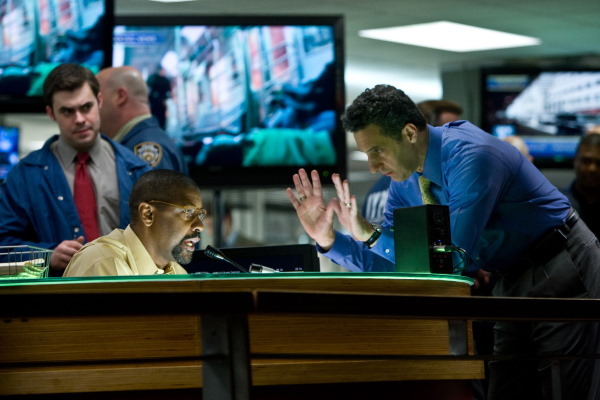
Cast: Denzel Washington, John Travolta, James Gandolfini, Luiz Guzman, John Turturro
Released: June 12, 2009


This is one of those instances where I not only saw the remake before the original, but I did not even know that the 2009 film was even based on another movie (which is based on a book). While both movies have their flaws, I think the original is the superior film. I thought it was going to be slow and boring (and yes, it is a bit slower than the remake), but I can see people in the '70s having a lot of fun watching this movie. Plus, the fashion is outrageously hideous. The whole color palette of this movie is brown, red, and orange. Seriously, why did the '70s love those colors?

The plot of the movies is simple: a subway car is hijacked and the perpetrators won't release the hostages until their ransom is paid by the transit police. The train is called Pelham 123 because it comes out of Pelham Bay at 1:23 pm.

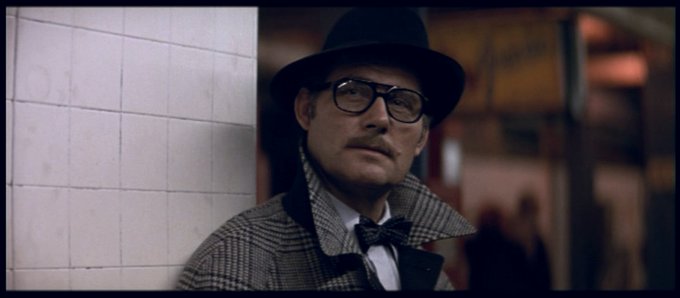
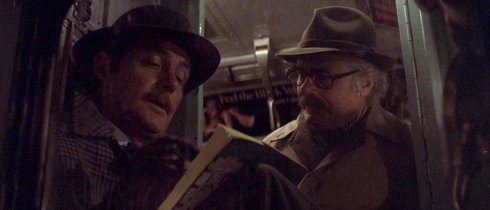
Let's meet our main players: leading the heist in the '74 movie is an Englishman who calls himself "Mr. Blue" (Robert Shaw). He is joined by three other men who also have colors as code names. There's Mr. Green (Martin Balsam), Mr. Brown (Earl Hindman...you probably know him best as Wilson from Home Improvement), and Mr. Grey (a young Hector Elizondo). I'm guessing this movie inspired Quentin Tarantino when he made Reservoir Dogs! All the men are disguised in trench coats, fake mustaches, hats, and glasses. Mr. Green, who appears to be the oldest of the four men by at least a decade, is sneezing and sniffling right off the bat (and being really disgusting about it...he sneezes right into his hand; doesn't he know he's supposed to sneeze into his elbow?) and I'm thinking that this is going to be an essential part of the movie. I'll give you a little hint: it is. While Mr. Blue is calculating and cold and is able to remain calm under pressure, his successor is...not. In the remake, the perpetrator who hijacks the train is a man who calls himself Ryder (John Travolta). Very clever movie! Ryder is the complete opposite of Mr. Blue. First of all, he's wearing a black leather jacket with a ski hat and has a handle bar mustache and a neck tattoo, so their images are totally different too. There's a lot of screaming and cursing and threats and instability coming from him. He plays this very similar to the way when he turns into Nicolas Cage's character in Face/Off. In fact, I'm pretty sure there's a scene later in the movie where he tells Denzel's character, "Woo wee, you good lookin'" or at least it's very close to that. I have to wonder if the movie would have been a twee bit better if Denzel and Travolta had switched places. I think Denzel would have played it more cool and calculating like Shaw. I had to laugh when I was reading the IMDb trivia for this movie and one of the entries was "Ryder is calmer in the novel and the original film, but angrier in the remake." Yeah, no kidding! Ryder has his henchmen as well but they don't play as significant a role as they do in the original.

Both men and their minions are able to separate the first car from the rest of the train and I believe there are 17 hostages in the original and 19 in the remake, but I could be wrong. When Mr. Blue and the others take out their guns, nobody hardly even blinks an eye except for one woman who gasps. The other passengers are either reading or talking amongst themselves, or in one woman's case, is dead asleep. In fact, I thought she WAS dead for the longest time, but she was just actually really drunk (we see a bottle fall out of her bag at one point) and spends the majority of the movie asleep on the subway bench. Then, when Mr. Blue announces, "Your attention please. Anyone who tries to rise is going to get shot", it is met with laughter. The only one who seems to be concerned is the woman who gasped (and she gasps again here). What is wrong with these people? Do they not see the four men with guns? Do they not realize the severity of their situation? Didn't hijacks happen all the time in the '70s? Shouldn't they be taking this a little more seriously? Someone even makes a crack about how it's usually a plane that get hijacked. I did a bit of research over at the scholarly website known as Wikipedia and it appears that there were more hijackings in the '70s than there were in the '90s, '00s, and '10s combined. So it's not like these people are strangers to hijackings...I guess they just weren't used to one on a subway! An old man asks, "Shouldn't we be let in on what's happening?" and Mr. Blue replies with, "What's happening is that you're being held by four very dangerous men with machine guns." Talk about stating the obvious!

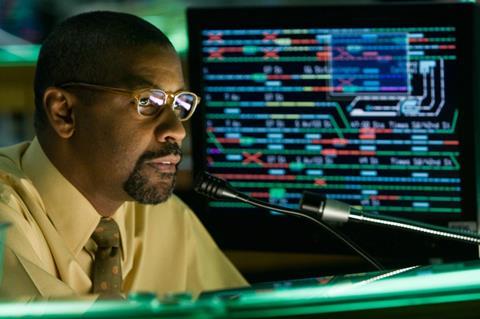
On the other side of the coin, our are heroes. In the '74 film, Walter Matthau plays a transit cop named Zachary Garber and in the '09 film, Denzel Washington plays a subway dispatcher named Walter Garber, so a nice nod to the actor of the original film. Through the majority of the movie, Denzel is just sitting at a desk, looking a bit disheveled at times. He's very pedestrian in this. I guess they wanted to make sure this is just your ordinary guy who's not used to being a hero. It drove me crazy when he referred to the train as "one twenty-three" instead of "one two three", but once Ryder takes over the train, he refers to it by the right name.

Matthau's Garber has a couple of supporting players who help him. There's Operations Lieutenant Rico Patrone (the late, great Jerry Stiller, you probably know him best as Frank Costanza) and a man named Frank Correll who I didn't catch what his title is, but he's someone who doesn't think they should pay the money. When he hears Mr. Blue's demands, he declares, "You're out of your skull!"

Mr. Blue gets in contact with Garber at the control center and tells him he has seventeen passengers and the conductor held hostage and is prepared to kill any or all of them if they don't obey his demands which is he wants them to tell the mayor that they demand one million dollars (pretend I'm saying that in a Dr. Evil voice) in cash for the release of the car and the passengers. He wants the money by 3:13, which is an hour from now and they will kill one hostage for every minute it's late and if anyone intervenes in any way, they will start killing hostages immediately. He tells them there are three things that they should know:
1. Pelham 123 is completely in their control.
2. There are four of them and they are all armed with automatic weapons.
3. They have "no scruples whatsoever about killing."

In the remake, it's basically the same deal, except it appears the going rate for 18 hostages (there were 19 originally, but somebody has already been killed) in 2009 is ten million dollars. Inflation, am I right? He also wants his money within the hour and will also kill one passenger every minute the money is late. I did like the exchange between the two lead actor when Ryder asks Garber when he thinks a fair time limit would be and Garber replies, "Thursday?" and Ryder tells him, "I was thinking more like an hour." Now, it would have been nice to know what day it is (if they said, then I missed it) because it would be one thing if it was Friday and Garber wanted a whole week, but it was Tuesday or Wednesday, I think 24 or 48 hours would be a much more fair time limit than a freaking hour!

The very limited time limit is pointed out in the '74 movie. After Garber tells Mr. Blue that the mayor has agreed to pay the ransom, he is given very precise instructions on how the money (of which he wants all the bills to be old so the serial numbers will be random) should be sorted and prepared. He tells him he has 26 minutes remaining, but Garber says he should turn off his clock since they agreed to pay the money. As he tells Mr. Blue, "Your instructions were complicated. The money has to be counted, stacked, tied, transported, - it just isn't physically possible." While I definitely see Garber's point, I understand why Mr. Blue still has a time limit. If he turns off the clock, it could give the police the excuse to think of another way to try to stop them or not pay the ransom or something. However, 26 minutes is a ridiculous short time to prepare a million dollars in a very specific way even if there were a lot of people helping them. Ha, wasn't there a task on a season of The Amazing Race where the last three teams are at a casino in Vegas and they have to count a million dollars worth of chips and they were having a tough time with that. Of course, there are only two people to a team.

There's one particular tiny change I really loved how they handled in the remake. So in the original it is revealed to the control center that there is an off duty cop on the train as one of the hostages. They know this because there were two cops and one of them got off and reported it when the news got out. They have no idea who the cop is, but whoever it is, they can't do anything anyway. Being set in the '70s, this movie is quite cringe-y with its sexism and racism. Correll says if he was running things, he would just go in and start blasting them (this guy is a real piece of work) and wonders about the cop: "When is he going to start shooting?" Garber replies that they don't even know if the cop is a man to which Correll scoffs, "A woman cop? What the hell good are they?" Then he mumbles something about "her goddamn purse" which I didn't quite catch, but it was clearly sexist and offensive. Then, later, Garber himself dismisses the idea of a female cop when they're talking about the cop again and he says, "There's a bunch of heavily armed men down there. What chance does one lousy cop got? Especially if it's a dame." Ugh, I mean, honestly, I would think if the cop were a man or a woman, they wouldn't have a great chance. Of course the cop turns out to be a man. This is the '70s, after all. But they keep this joke going for a payoff that's quite lame. I'm jumping a bit ahead of myself, but the cop will jump off the train to pursue the perpetrators and gets shot (he's still alive, though) and is laying facedown on the tracks. When Garber sees him, he thinks it's a woman because he has long hair and says, "Everything will be okay, ma'am" or something like that. You know what they did with the cop who was on the train in the remake? They kill him off first thing. The cop tries to stop the men and is immediately taken out. Perfect. Now you don't have to deal with a lame ongoing joke with a lame payoff. Of course the original is a little more comedic than the remake, so I can't see the new one doing that so I think they handled that just right. 

The '09 movie focuses a bit more on the Garber/Ryder relationship than the '74 one does. We get more backstory on both these characters. In the original, while Mr. Blue mainly speaks with Garber, we also see him speaking with Correll and Patrone and he doesn't really care who he's talking to as long as he's getting his money. In the remake, Garber is the first person to talk to Ryder and once a hostage team is assembled with a lead negotiator who takes over (John Turturro), they send Garber home. I guess his shift was over or something. When Ryder realizes Garber is no longer there, he gets very upset and irrational and he kills Jerry, the motorman, who was also a friend of Garber's. He tells them they have sixty seconds to bring Garber back or he will kill someone else. Garber is just exiting the building when they hustle him back in and gets back to the communication center with second to spare. He asks Ryder why he killed Jerry and Ryder tells him the city of New York killed Jerry. Don't think it quite works that way, Ryder. 

Ryder has looked up Garber on the Internet and finds out he is being investigated for allegedly taking a bribe. He brings it up and wants Garber to basically confess with everybody standing around and hearing every word. Garber keeps insisting that he didn't take a bribe. He tells Ryder that he was the assistant chief transportation officer and part of his job was to go to the people who built the trains, the manufacturers, and bid on contracts for the train. He was accused of taking a $35,000 bid when he went to Tokyo to look at two different trains and chose what he thought was the best train and said it would be the train he would pick anyway. It hadn't yet been decided if he was guilty or not, but he was demoted to answering phones while they waited for the outcome. Ryder, the ever so rational person that he is, threatens to kill a passenger unless Garber admits he did it. He grabs a teenage boy who he has speak to Garber, then tells him, "You've got five second to save this kids life." What else can Garber do than confess to taking a bribe? Whether or not it's true, you have to at that point. He tells Ryder he did take the bribe and when Ryder asks him what he did with the money, he says he used it for his kids' college tuition. Now the movie never lets us know if he did take the bribe or not. Yes, he did confess, and yes, he did have a quick answer to how he spent the money, but saying you used the money for your kids education seems like fast thinking and makes you appear a little sympathetic...it's not like he said he used the money for a vacation or a big screen TV. But he had no other choice but to confess to save that kid's life. When someone wants you to confess to something, even if you didn't do it, and they're holding a gun to someone's head and tells you you've got five seconds to confess, YOU ALWAYS CONFESS YOU DID IT! I did laugh when Ryder tells the kid to say, "Thank you, Garber, for saving my life." Just the way Travolta delivers that line is really funny. 

The bribe storyline isn't in the original, but the fact that it was a Tokyo business trip is clearly a homage to the original when Garber is showing four Japanese men who are directors of the Tokyo metropolitan subway system around. There's really no reason for this except that it provides exposition so Garber can introduce the audience, through these men, to other characters and explain how certain things work. When he introduces them (and the audience) to Rico, he wants him to tell them something exciting. Patrone tells them there was a bomb scare yesterday, but it just turned out to be a cantaloupe. (How do you confuse a cantaloupe with a bomb?) They try to make a joke (a very cringe-worthy one, at that) that Garber thinks they can't understand English and calls them "dummies" and "monkeys" in front of their faces, but turns out they understand English just fine. Why they still remain polite when Garber is being quite rude in front of them, I'm not sure. 

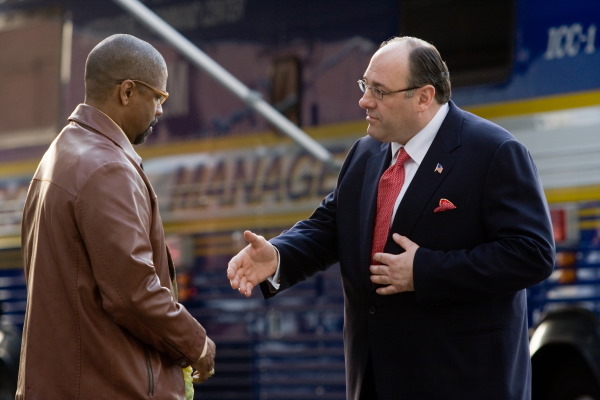
The mayor of New York plays a role in both films. In the '74 movie, the mayor is played by Lee Wallace and in the '09 movie, the mayor is played by James Gandolfini. There is a meeting about whether or not the ransom should be paid; there are people who think it shouldn't, but the mayor decides to pay the ransom because at the very least, he is guaranteed eighteen votes (although two passengers on that train are children, so therefore aren't able to vote...also, at one point I heard a baby crying, but there was no baby on that train!). Here's a fun fact: Doris Roberts plays his wife. I didn't know it was her until I read her name in the credits, then had to go back and watch that scene and I was like, Oh, yeah, that is the mom from Everybody Loves Raymond

In the remake, the mayor is brought to the Control Center where he talks with Ryder who makes a deal with him: he will trade all the passengers for him and he could save the life of seventeen New Yorkers. (The number of hostages to start was nineteen, but after the death of the cop and Jerry, the motorman, the toll went down to seventeen.) The Mayor doesn't take his offer and Ryder screams at him that he didn't want him anyway.

Okay, remember the teen boy that Ryder almost kills but doesn't because of Garber's confession? (Or, should I say, "confession".) Well, he has a laptop he's using to communicate with his girlfriend (heh, if they ever did a remake of the remake, they would change that to an iPhone!). In the chaos of the takeover of the train, the laptop gets tossed underneath a seat and the connection is lost. Later, when the power is turned back on, the laptop, which is open and oh so conveniently pointed in the right direction, the girl sees what is going on and streams it live. This allows everyone at the command center to see what is going on inside the train and Garber recognizes one of the hijackers as Phil Ramos (Luis Guzman), a former motorman who killed a few passengers ten years ago when he was high on cough syrup and ran into the platform. He went to jail for manslaughter. 

Ryder has more of a backstory than Mr. Blue does. Pretty much all we know of Mr. Blue is that he was a mercenary in Africa. With Ryder, we learn that he's a Wall Street Guy. He doesn't seem like the Wall Street type with his neck tattoo, but I guess doing hard time in a white collar prison will do that to a guy. It is discovered that his real name is Dennis Ford (but I'll still refer to as Ryder for the purpose of this review) and he was released from prison two weeks ago where he served a sentence of nine years, and, -get this- he spent the last four of those years on the same cell block as...dun, dun, dun....Phil Ramos, the disgraced motorman. Why a Wall Street guy and a motorman would be at the same prison is beyond me. 

Ryder was sent to prison for insurance fraud; he stole $20 million. He tried to take a plea bargain for three years, but the judge gave him ten because they didn't recover all the city's money. Honestly, they try to make sure he has a backstory that it becomes convoluted and confusing (seriously, this guy is a Wall Street guy, seriously?).

Now it's time for the money to be delivered. In both movies, they cut it very close to the wire. In the '74 film, Garber asks Mr. Blue for more time, but he says no, not even fifteen or ten minutes more. Once the money is sorted, they have about seven minutes to make it to their location. Garber doesn't think it will be enough time and they still have to carry the money down to the track on foot. Once again, Mr. Blue has strict and precise instructions on how he wants the money delivered: two unarmed policemen will walk down the track. One will have the money and the other will have a torch which he will flash continuously from side to side. Okay, real talk here: when he said "torch", I thought he meant a literal torch and I was thinking, Now I know there were flashlights in the '70s, but once he said "flash" I knew he meant a flashlight. Calling a flashlight a torch is either a British thing or a '70s thing. Perhaps both. Anyway, back to the instructions. When the policemen reach the car, the rear door will be open and the one with the money will throw the bag under the floor of the train and they will both walk back to 28th Street Station. Mr. Blue warns him, "Any wrong moves by anyone, I will kill a hostage" and ends the conversation by telling him that he has five minutes to deliver the money. When Garber realizes the money won't reach its targeted destination by 3:13, he asks Mr. Blue if they can at least get the money to the entrance by that time and Mr. Blue agrees. At least this movie is dealing with a more reasonable villain! When there is a minute left remaining, Mr. Blue is getting ready to shoot someone unless the money is there. Garber makes an executive decision and tells him the money has arrived even though it hasn't (it's been a bit delayed because a cop car has flipped over) and Mr. Blue tells him, "You made it just in time, didn't you?" Oh, if only he knew. An astonished Garber asks him,"If we were a few seconds late, you would have knocked off an innocent person?" Yeah, I have to agree with him. I think most criminals would want to avoid killing people. If you're there to get a ransom, collect your money and go. Why add murder to your conscious? But I suppose threatening to kill someone is a good way to instill fear. Not that I would know or anything. 

During the exchange, things don't go as planned when a gun is fired by a sniper who the police have positioned in the tunnel. In return, Mr. Grey retaliates and ends up killing the conductor. What a shock; once the money is delivered, Mr. Blue calls back with more strict and precise instructions: he wants Garber to restore the power to the entire sector, then clear the local track from 28th Street to the South Ferry. He wants all the signals set to green. As always, he promises threats: if there are any red lights, he will shoot a hostage; if he sees another policeman, he will shoot another hostage; any deviation, he will shoot anther hostage. I almost wanted Garber to ask him, "What will you do if things don't go your way?", but better not goad the man with a gun and a greed for a million bucks. However, Garber does get a good shot in when he says,  "Listen, fellow, I hope you take this in the right spirit, but after this is over, you should seek out psychiatric help." Yeah, no kidding. Although Ryder needs way more psychiatric help than this guy does. 

Speaking of Ryder, in his movie, the money is late (surprise, surprise) because of an overturned car and Ryder is about to kill a young boy (he likes to go for the young passengers on his train; I guess he wants to make a statement), but another passenger, an Armed Forced guy who has somewhat made a connection with the kid and his mother, steps in front of the kid and takes the bullet for him. There is also accidental fire shot in this movie and Ramos is killed. There movie differentiates from the original when Ryder wants Garber to bring the money because then the cops won't bother him. That and because his motorman is dead and he knows that Garber was a motorman for over six years. There is talk among others on the command center side if Garber is in on this and I'm thinking, Oh, wouldn't that be a great twist if he was part of this whole setup the whole time? Spoiler warning: he's not. I guess they didn't want to veer too far from the original as the only people who are part of the plot are the four men in trench coats and hats and mustaches and spectacles. 

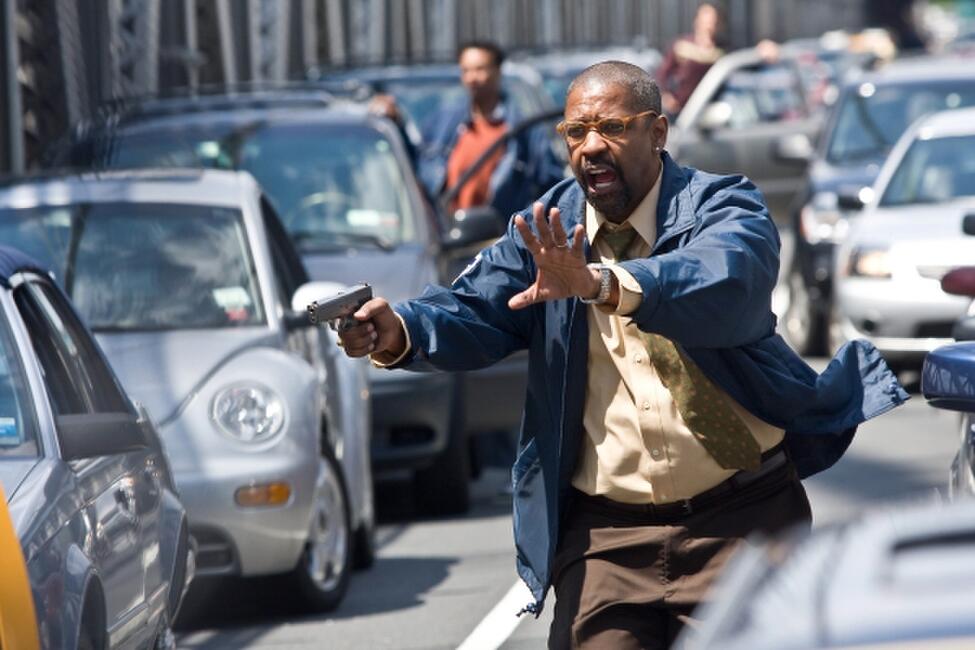
Ryder has instructions for the FBI agent similar to the ones Mr. Blue had for his Garber: he wants the power restored to the whole sector and the local tracks to be cleared from 68th to Coney Island with all green lights and no cops. With a gun pointed to him, Garber is forced to drive the train to the next station, then Ryder and the two remaining hijackers jump off after rigging the train to keep going...and it will because all the green lights have been ordered by him to stay on. I can't remember how, but Garber also manages to separate from the group and also manages to snag a gun. All the passengers are freaking out because the train won't stop and they realize nobody is driving it, but it manages to stop with no serious injuries. The other two hijackers are killed so Ryder is the only remaining one. Garber has followed him and confronts him on the Manhattan bridge where the police are running towards them. Ryder wants Garber to shoot him before the police reach them or he will kill Garber himself. He gives Garber a countdown of ten. Garber keeps turning his head to yell at the police who are nowhere near him and every time he kept turning his head, I kept shouting at the screen, "Don't turn your head, Denzel!" because I was worried that Ryder was going to grab the gun out of his hand. Of course the police don't reach them at the end of his countdown and Ryder goads Garber into shooting him which he does. Garber is able to pick up the gallon of milk he promised his wife he would get (in other words, he promised he would bring himself home) and most likely his bribery charges have been dropped.

So, yeah, if you're familiar with the original then you know the remake's ending is quite different. Sure, there are a few things they keep the same (like the train speeding down the tracks without a driver), but it goes a different direction, no pun intended. For one thing, Mr. Blue does not want Garber to bring him the money. He already has his motorman who's very much alive (besides, I don't think this Garber was ever a motorman.) Garber and Patrone are wondering why they want to go to the South Ferry. Is there a boat or a sea plane waiting for them? They are following the train's moves on the board at Grand Central Tower so if they stop anywhere before the South Ferry, they'll know about it. 

Without any notice the train starts moving and there's a bit of comedy when people ask "what train is moving?" and Garber says, "What's the matter with everyone? How many hijacked trains we got around here anyway?" Mr. Blue tells Garber they're moving because they're trying to put some distance between them and all the cops that are situated in the tunnel.

A cop named Detective Daniels who is keeping in communication with Garber and has an eye on everything from the streets asks Garber if perhaps the hijackers jumped off the train after setting the throttle and while they're chasing the train, the bad guys are sneaking out of an emergency exit behind them. Garber dismisses this and tells him it's impossible because of "a little gizmo called 'dead man's feature'" which is a handle that has to have a hand pressing down hard on it at all time or else the train "stops cold". It was created in the event a motorman ever "drops dead". 

They notice the train stop again and Garber tells Daniels to put detectives on every platform from 14th to the South Ferry. He also decides to join Detective Daniels so it's Patrone who gets in contact with Mr. Blue. While he wonders where Garber is, he doesn't threaten to kill anyone if he doesn't get to talk to him like Ryder did. When Mr. Blue questions where Garber is, Patrone tells him, "Even great men have to pee." And after Mr. Blue tells him to give his regards to Garber, Patrons tells him, "You can do it yourself at the arraignment." Ooh, snap, Frank Constanza! 

Turns out Detective Daniels was right and the four hijackers have managed to override the dead man's feature so the train is able to keep on running without them. This is when the policeman who is one of the hostages jumps off the train after them in the dark and crouches in the shadows to not be detected. One of them thinks they heard something, but the others just shrug it off. Meanwhile, the train is going fast, about 70 mph and the drunk woman is still passed out while everyone else is screaming. I think this woman needs help; somebody get her to an AA meeting, stat! Garber has a realization that the men must have jumped off the train, so he wants to go back to where the train was stopped for a few minutes. We probably get the most '70s line from the whole movie when Detective Daniels tells another officer, "Turn this thing around and burn rubber!"

We see the four men take off their disguises and put on different hats. I love the way Robert Shaw pronounced "moo-stash-es". You know, it's too bad we don't see a scene of Ryder in the remake peeling off his tattoo to reveal it was a fake one. That would have made a lot more sense because no way a Wall Street guy has a neck tattoo. Mr. Blue instructs them to toss their guns, but Mr. Grey wants to keep his with him in case "something goes wrong". He wants to make sure he has "some heavy artillery" with him. Mr. Blue coldly tells him, "I won't ask you again" to which Mr. Grey retorts with the worst reply he can think of: "Blow it out of your ass, Mr. Blue" and thus gets a handful of bullets in his chest. I mean, he did ask for it. 

The cop who jumped off the train after them and is hiding in the tracks takes his shot at Mr. Brown who comes out from the door and is peering around the wall on the small stoop of steps he's standing on. It is absolutely ridiculous that the cop kills him on his first try. He is laying down so already he doesn't have great aim, but the shot he has for Mr. Brown is narrow, but yet, despite all that, he kills him. It apparently takes a lot out of him because he's lying in the tracks, moaning, and Mr. Blue comes out and is about to shoot him, but this is when Garber shows up and tells him to drop the gun. Knowing the gig is up, Mr. Blue touches the live rail with his foot and electrocutes himself. Dude, if you wanted to kill yourself, why not just reach for the gun you dropped and just have Garber shoot you? I feel like getting shot would be a more desirable death than being electrocuted! Garber is cringing hardcore and I'm like, dude, I'm right there with you. Ouch. 

So the transit police know for a fact that three out of the four hijackers are dead, but where is the fourth guy, known as Mr. Green? They also know the three dead men were not the motormen, so that must leave the fugitive because somebody had to know how to drive the train. They go through a list of motormen who were recently discharged and find they have nine people to look into. We see Garber and Patrone pay a visit to a couple of them before they make their way to the apartment of Mr. Green, who they know as Harold Longman. Before they knock on the door we see the old man doing a Scrooge McDuck and literally rolling around on his bed covered in bills. When the transit police knock on his door and announce themselves, he tells them to wait a minute and hurriedly throws all of his money in the oven. Obviously this guy has never seen Breaking Bad or El Camino or else he would think of some better hiding spots for his money than a freaking oven! I did think it was a nice touch that he flushed the toilet right before he answered the door to make it look like that was the reason it took him a few minutes to answer the door. The cops have some questions for him and he tells them he works nights at Kennedy Airport as a forklift operator and had been home the whole afternoon, taking a nap. Longman is facing his bed when he's talking to the cops and sees a stack of money peeking out under the bed so he walks over and discreetly kicks it under his bed. When Garber asks him if he heard about the subway hijacking, he plays dumb and tells him he doesn't know about it and thinks he's kidding. I love Garber's deadpan reply: "Do I look like I'm kidding? Would I be here if I were kidding?" He does make a good point. 

Right before they're about to leave and come back with a warrant (as Mr. Longman points out, they need a warrant to search his place), Patrone wants to light his cigarette but doesn't have his match, so Longman invites him to use the stove. Now even though the money is in the oven and Patrone was using one of the burners, I thought for sure the money was going to be found or accidentally set on fire. Actually, what I really thought was that when Longman was busy talking to the detectives, his wife was going to come in the kitchen and turn on the oven to start dinner and by then it would be too late to save the money, but he didn't appear to be married. But nothing happens and the two cops leave, telling him they'll be back with a warrant which will give Mr. Green (gotta love that the guy who wound up with the money got the "green" name) plenty of time to hide his money somewhere else.
Busted! 

But then...something happens. Remember how I said all his sneezing was going to come back and play an important part? Well, throughout his phone calls with Mr. Blue, Garber kept hearing a sneeze in the background and at the very moment he and Patrone are about to leave, he hears that exact same sneeze and knows they caught their man. We get a freeze shot frame of Walter Matthau poking his head through the door and giving the man a "Gotcha!" look. The whole thing feels like something you would see at the end of a cheesy old sitcom complete with a "Wah-wah-wah" sound effect. Hey, I just said I preferred the original to the remake; I never said it was a perfect film!

Thursday, July 2, 2020

American Gangster

American Gangster
Director: Ridley Scott
Cast: Denzel Washington, Russell Crowe, Josh Brolin, Chiwetel Ejiofor, Ruby Dee, Cuba Gooding Jr., John Hawkes, Carla Gugino, Idris Elba
Released: November 2, 2007
Viewed in theaters: November 7, 2007

Oscar nomination:
Best Supporting Actress - Ruby Dee (lost to Tilda Swinton for Michael Clayton)
Best Achievement in Art Direction (lost to Sweeney Todd)


So after being nominated for Oscars in the same category (Best Actor) in two years (almost consecutive years; 1999 and 2001) and one being an extremely CLOSE race (I'm guessing!), Denzel Washington and Russell Crowe star in a movie together in 2007, this one. But wait! There's a couple of caveats! (That might not be the right word...) First of all, this was NOT their first movie together. No, film nerds (or Denzel and Crowe fans) know that they starred in the 1995 (and truly terrible) film Virtuosity. I caught the last five minutes of it on TV once and even watching that, I could tell it was a terrible movie. This was before anyone knew who Russell Crowe was in the States. I'm not sure how much screen time they share in that movie, but I'm guessing it's more than the screen time they share in American Gangster! That's my second caveat. Are they really in the movie together if all of their scenes (except one at the end) are separate? You have one story with Denzel's character and one story with Crowe's character. It's kind of like when Pacino and De Niro were in Heat together and only had one scene together in the middle. (Well, I guess technically they had a scene together at the end, but there was't much conversing as they were trying to run away from/kill each other!) I would say the ratio for screen time is 60/40 in favor of Denzel, which makes sense, as the story is really about his character. He plays Frank Lucas, a real-life man who smuggled heroin from Southeast Asia into New York and made a butt load of money. He was the bodyguard, driver, and collector for Harlem gangster Bumpy Johnson for fifteen years and after he died in the late '60s, Frank took over. He gets the idea for smuggling drugs when he's watching a news report about American troops becoming addicted to opium and heroin, which are "easily available and relatively cheap", that they get from Bangkok and Saigon. He learns that a "high purity of heroin is leading to an epidemic of heroin addiction among U.S. soldiers" and his eyes become dollar signs. He calls his cousin's husband who is in Bangkok and visits him there. He wants to take 100 kilos of heroin in the U.S. and wants to smuggle it in via helicopters. It's 100% pure heroin and Frank calls it Blue Magic (see, when I think of a drug with "blue" in the name, I think of meth! But maybe any drug that is of high quality appears blue? I really don't know anything about drugs or selling them!). Needless to say, business starts booming for Frank and he becomes even more powerful than he was before. One of the most well-known scenes in the movie is when he flat-out shoots Idris Elba in the head in broad daylight. Well, it was a dealer played by Idris Elba who owed Frank money, and Frank was sending a message to others when they don't give Frank what they owe.

Frank makes so much bank he is able to buy his mother (Ruby Dee) a mansion where they celebrate many holidays. Everything I learned about money laundering, I learned from Saul Goodman and Frank Lucas does not do a good job of laundering his money if he's flaunting it like this! He could probably take his own advice, which is what he tells his brother, Huey (Chiwetel Ejiofor) when he wears a super gaudy suit at a club: "The loudest one in the room is the weakest one in the room." There's a very Godfather Part II moment when he kisses him on the mouth and says, "If you weren't my brother, I'd kill you, you know that?" Oh, and if you happen to get blood all over his $25,000 alpaca rug, make sure you "blot that sh*t, don't rub it!"

At one of his clubs, he meets and falls in love with Eva, a young (much younger than him!) woman from Puerto Rico who won a beauty contest. When she meets Frank's mother, she calls Eva "an angel come down from heaven". Now that's a great mother-in-law to have. (Though of course they meet before she marries Frank.)

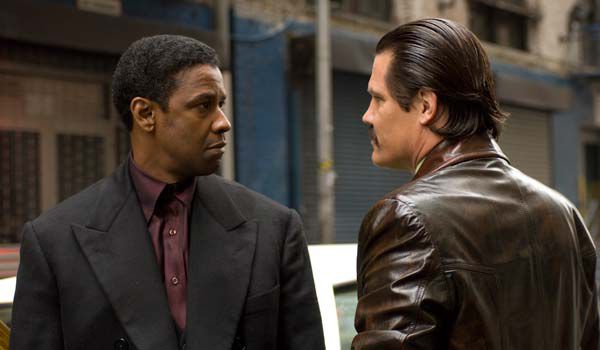
On the day of his wedding, right after the ceremony, corrupt cop Trupo (Josh Brolin) confronts Frank and his new bride to "congratulate" him. He tells them he wants "his share" of ten grand at the first of each month and threatens him that he's "special" because he's with the Special Investigation Unit. As you may have guessed, this does not make Frank happy and he responds by leaving him a live turkey at his front door on Thanksgiving, then blowing up his prized car.

In a later scene of the same day, Trupo pulls over Frank and Huey, who tells Frank they have drugs in the trunk. Not surprisingly, Trupo checks the trunks and takes the drugs. The whole interaction between them is great. He asks Frank, "What are we going to do about this?' To which Frank replies, "We don't do s**t about it. We close it up, throw it back in the trunk, everybody goes home, have some pumpkin pie, warm apple cider." Trupo tells him, "I got a better idea. Or would you rather me throw you and your brother in the f***ing  river?" Of course Frank gets the last word in when he says, "Or would you rather your house blows up next time?" Ooh, snap. Since Huey is the one who stupidly left the drugs in the trunk and since they lost a lot of money when Trupo took them, Frank smashes Huey's head against the car window after they both get back inside and breaks the window. Frank may not kill his brother, but he will beat the crap out of him. He has quite the violent streak and if I were his wife, I would be a little scared. 

Speaking of his wife, the most Denzeliest line is when he exclaims, "They tried to kill my wife!" to mafia boss, Dominic Catanno, who had guaranteed him "peace of mind", but he replies, "I don't feel so peaceful" after he and his wife go out one night to get some takeout and when she stays in the car when he goes to get it, he sees someone driving by really fast and realizes what they're going to do and is able to run to his car and grab Eva before she can get shot. He doesn't know who tried to kill her. Was it the mob or was it fellow mobster Nicky Barnes (Cuba Gooding Jr.)?  Understandably, his wife wants to leave (preferably the country), but Frank refuses. 
Russell Crowe plays Richie Roberts, the detective who is on the case to track down where the drugs are coming from. His story doesn't really become interesting until he figures out Frank Lucas is behind all of this. For instance, there's an ongoing story line where he and his wife (Carla Gugino) are going through a divorce, and, eh, I don't care. Every time he spoke, I could still hear a trace of his Australian accent, but when he was yelling his New York accent was quite good.

When we first meet him, he is a cop, but he's taking night classes because he wants to be a prosecutor even though he has a fear of public speaking. He and his parter find a million dollars in a trunk of an abandoned car which they got a tip about from a bookie. His partner doesn't want to turn the money in because they'll be pariahs and that, "Cops kill cops they can't trust." However, Richie does the right thing and turns in the money and is called a "f***ing Boy Scout (which is hilarious since it's Russell Crowe) and this becomes an ongoing storyline for him, how people can't believe he turned in the money. I have to wonder, would it be any better if he and his partner had kept the money?

When he is assigned to head the investigation of where the new drug is coming from, he meets his ragtag team which includes John Hawkes, who always seems to be chain-smoking (I think there's one scene where he isn't smoking!), and RZA from Wu-Tang Clan. He tells them their mandate is to make major arrests; they are looking for the suppliers and distributors, not just random "street guys." They discover the new drug called Blue Magic is twice the potency as the  regular stuff for only ten bucks on every street corner. Richie muses, "Who can afford to sell s**t twice as good for half as much?" Be patient, Richie. You'll meet this man soon. As Frank himself will say, he sells a product that's "better than the competition at a price that's lower than the competition."

Richie decides that the Narcotics Squad needs to start from scratch because they aren't getting anywhere. He "borrows" $20,000 from his boss where he pays someone at a Newark car wash to buy Blue Magic and he tells them it will be there tomorrow. When he and John Hawkes see the guy leave with the money, they follow him to see where he will take them. He's headed towards the city and John Hawkes isn't sure if they should follow him because the city is not in their jurisdiction, but Richie tells him to follow him because he wants to stay with the money that he's responsible for. Richie sees the guy enter some kind of fast food joint and just waits outside while he watches a group of men led by our corrupt cop, Trupo, take the bag with the money. He follows the men and stops them to tell them the money is registered and he needs it back. Trupo gives it back and says he can have the money "this time" and threatens him to never come into the city unannounced again.

Both Frank and Richie are at the Muhammad Ali/Joe Frazier fight on March 8, 1971 at Madison Square Garden. It was called the Fight of the Century so Richie figures anybody who's Anybody will be there. He notices Frank shaking Joe Frazier's hand and wearing a fur coat and sitting even closer than Dominic Cattano, the mafia boss, and takes picture of him, knowing that he's someone important. His team gets the plates of the limo he rode in. Frank is not only wearing a fur coat (a gift from his wife), but he's always wearing a fur cap that he doesn't take off. His wife was also wearing a fur coat, but at least she takes it off. Not only is this coat just the ugliest thing and makes him look ridiculous and stick out (maybe he should take his own advice that he told his brother!), but I don't know how he can stand being in a crowded arena with that thing on! Gah! The flashy coat is how Trupo found out about Frank and started exhorting him, so he angrily throws it into the fire with his wife watching him right there. I mean, honestly, I hope he would have thrown that hideous thing in the fire regardless, but it was a little rude to do it in front of the person who gave it to him!

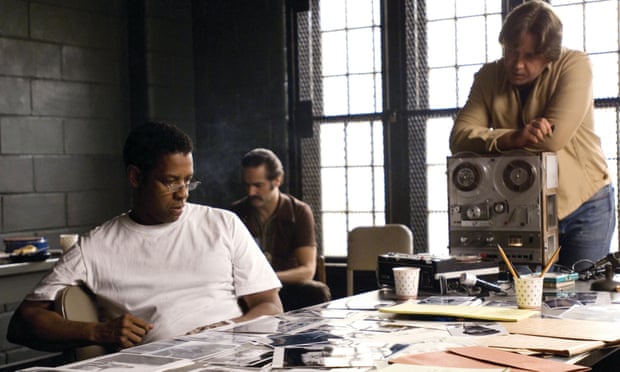
Richie's group gathers intel about Frank. They learn about his connection to Bumpy Johnson and that he has his brothers and cousins working for him. They check out his brothers at their jobs which are spread out across Jersey and the five boroughs - one works at a dry cleaners, one makes custom furniture, one works at a hardware store, and one works at body shop (Frank has a lot of brothers!). All of those businesses are distribution and collection points for Frank's drugs and money. They track Frank's moves and note that he gets up at five every morning, has breakfast at a diner in Harlem by himself, takes a meeting with the accountant of his lawyer, usually stays home in the evenings, and if he does go out, it's to one of his two clubs or to a handful of restaurants with his wife. He takes his mother to church every Sunday. He is never seen hanging out with any organized crime guys. As Richie notes, "Everything about Frank's life seems unpretentious, orderly, and legitimate." He doesn't think they're going to get informants inside the family.

They are able to obtain one of Frank's cousins, Jimmy, when they see him attempt to kill his girlfriend when they're having a fight outside their home and he shoots her, but doesn't kill her. They bring him in and tell him they have him for attempted murder which could be fifteen years in jail unless he helps them bring down Frank. They tell him he can avoid that if he straps a tape recorder to his body under his shirt (and remember, this is the early '70s, so this is a bulky piece of equipment...I'm surprise nobody even noticed!). He ends up recording a conversation when he's nearby Huey who's at a payphone, calling Frank, who is in Bangkok at the time to set up more drug shipments. The only thing the Narcotics team hear Frank say is, "Newark, short term, parking lot three" and a plate number. They know whatever it is, it's where the drugs will be coming in. 

While all that is going on, Trupo and his men barge into the mansion where Frank's wife and mother are and while they watch helplessly, tear apart the house to look for his secret stash of money. Not only does he find and take the money, but he shoots Frank's German Shepard since the money was buried under the dog house and the dog (who was on a leash) was guarding it. 

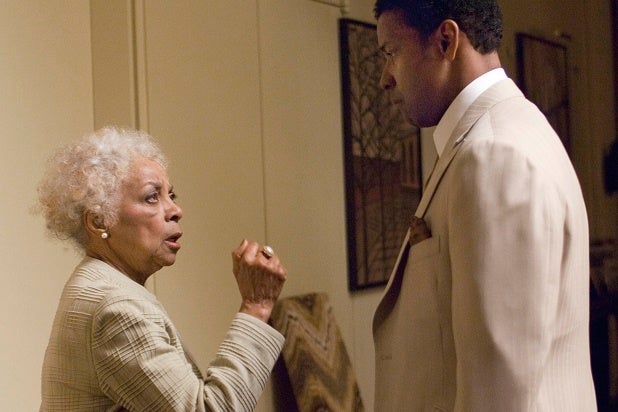
So as I was watching this, I really didn't understand why Ruby Dee was nominated for an Oscar other than it was a career nomination, but there is a scene between her and Denzel when Frank comes home and finds out what has happened and is ready to go get revenge, and this is when I realized it was this scene that got her the nomination. She tells Frank to not kill any cops and that his brothers look up to him and that "Even they know you don't shoot cops." She tells him, "I never asked you where all this came from because I didn't want to hear you lie." She then proceeds to slap Frank (the only person in the world who could get away with slapping Frank Lucas across the face is his own mother!) and yells, "Don't lie to me!" She tells him that his wife will leave, and that "I will leave you." This is really the moment where she gets to shine. 

So Frank has a nephew named Steve (played by T.I.) who has a great arm for baseball and Frank knows the Yankees' manager or coach (of course he does) and sets up a meeting for Steve to meet with him, but Steve skips it and tells his uncle he would rather do what Frank does. Really, Steve? You'd rather be a drug dealer than a world-class athlete? I mean, sadly, he probably does get paid better as the drug dealer. Unfortunately, it also cuts his life short. You could say he did not live his life. 

With the information they have, Richie and the Narcotics Squad is able to find the apartment complex where the drugs are being made and there's a lot of shooting and running and chasing. Definitely the most action-packed and tense scene of the film. Richie chases and apprehends Huey. While this is going on, Frank was at church, so when he comes out with his mother, Richie and the others are waiting for him. More than two hours into the movie, this is the first scene we get with Denzel and Crowe.

There must have been some kind of time jump in the movie because one minute Richie Roberts is the detective who captured Frank Lucas and the next minute he's the prosecutor in Frank's case. It feels like there's a conflict of interest there, but I'm not a lawyer, so what do I know? Literally, everything I know about law I learned from The Practice or Legally Blonde and I'm dead serious. Oh, and maybe that one season of Law & Order (thud, thud) I watched.

This is when we get the first scene (and only) of dialogue between our two main actors. Frank tries to bribe Richie, but it doesn't work on him. In the end, they come to an agreement with Frank giving the names of the cops that took the bribes and there are a lot of names. As more and more cops are being arrested, Trupo shoots himself in the head.

At the end of the movie Richie asks Frank if he wants a drink for his "good work" to celebrate and Frank asks him, "You got any holy water?" and they both laugh like they're best friends now. Yeah, that was a little weird. The tone just seemed off for them to be buddies. We get some information about their characters written in text on the screen such as Frank Lucas was convicted of conspiracy to distribute narcotics and sentenced to 70 years, but for his cooperation his sentence was reduced to fifteen years and he was released in 1991. Now that is a good deal; he shaved 55 years off his sentence! Frank and Richie's collaboration led to the convictions of 3/4 of New York City's DEA and Richie quit being a prosecutor to become a defense attorney and his first client was Lucas. So first he was this guy's prosecutor, and now he's his defense lawyer? There's gotta be a conflict of interest with that! 

Wednesday, July 1, 2020

The Bodyguard

Man on Fire
Director: Tony Scott
Cast: Denzel Washington, Dakota Fanning, Christopher Walken, Radha Mitchell, Marc Anthony, Rachel Ticotin, Mickey Rourke
Released: April 23, 2004


Here are three surprising things I learned while watching Man on Fire:

1. It is based on a novel (which looks like it was a series) from the early ‘80s by A.J. Quinnell. Based on what I heard about it, it is a bit different from the movie. I don’t want to spoil anything (and just to forewarn you, this movie will be spoiled), but there are characters that die in the novel that don’t in the movie and vice versa. The novel takes place in Italy and the movie takes place in Mexico. The 2004 movie is not the first film that is based off the book; there was another Man on Fire movie that came out in 1987 and starred Scott Glenn as the main character. Interestingly, Tony Scott was supposed to direct, but being that this was still really early in his career, he didn’t get the job. Of course he would end up directing this version, which is the version most people are aware of, anyway.
2. Speaking of Tony Scott, I was really surprised when I found out that this was only the second movie he did with Denzel Washington. I knew they did a handful of movies together (they did five), but after they did their first movie, Crimson Tide in 1995, it would be nine years until they did Man on Fire, then the three others (Deja Vu, The Taking of Pelham 123, and Unstoppable) all came pretty quickly after that. I guess I thought they did more movies in the ‘90s together, but nope.

3. And the third most surprising thing I learned is from the text that pops up on the screen at the very beginning: "There is one kidnapping every 60 minutes in Latin America." I accidentally read this as “60 seconds” at first, which really would’ve been quite shocking! As you can probably guess, this movie is about a kidnapping. The statistic goes on to say that 70% of the victims do not survive which is a little surprising since isn’t the only way the kidnappers make their money is to make sure they return the kidnapped person back alive? 

A wealthy couple, Lisa and Samuel Ramos (Radha Mitchell and Marc Anthony) living in Mexico City are looking for a bodyguard for their young daughter, Pita (Dakota Fanning). While Samuel is from Mexico City, Lisa is American (as well as white and blonde). There's no way that Pita (who is also white and blonde) is Samuel's biological daughter. They never mention it, but I assume he's her step-father. This makes sense because of their genetics and also makes sense for what will happen later on in the movie. The Ramos know because of their wealth, their daughter is a high target for being kidnapped. They hire John Creasy (Denzel Washington), an ex-Marine with an impressive resume; the only caveat is that he drinks. A lot. He tells this to Samuel, who tells him not to tell anyone he drinks, especially his wife. It should probably trigger a little warning about Samuel if he's willing to hire an admitted alcoholic to be a bodyguard for his daughter. I would almost say that this movie is a prequel to Flight, you know, the movie where Denzel plays an alcoholic pilot, but, uh, that wouldn't work.

Instead of Pita getting kidnapped right away, the movie establishes their relationship and takes its time. When Creasy brings and picks up Pita at school, she is very chatty and wants to know about him. He sternly tells her, "I'm not here to be your friend; I'm your bodyguard." Mexico City is an extremely bustling city and he always has to be on the lookout for any suspicious cars, people, or activities. Pita, who doesn't seem to have friends her own age (I'm sure she does, we just never see them as they're probably not important to the story), is very hurt by this, but Creasy can't be bothered. The first few weeks is like that and we see him drinking and he even tries to kill himself with his gun one night when he's in his room, but the bullet gets wedged. (What is it with Denzel characters trying to kill themselves, but not getting the bullet? Remember, that also happened in John Q). 

Meanwhile, Samuel has bought a dog for Pita and she names it Sam (well, I can't remember if she named the dog or if her dad already named it, but either way, it's weird that the dog is named after Mr. Ramos). You think the dog might serve some kind of purpose later on in the movie - whether it will do a heroic deed and die or whether it will get in the crossfires and die. The dog does not die, but the last time we see him is right before Pita will get kidnapped and we won't see the dog again. So what was the point of the dog? 

Pita is involved in her school's swim team and one day while she's practicing in her pool, Creasy helps her and this is when they start to bond. He had seen her at a meet where she flinched at the gunshot when she was on the block ready to dive in and because of that didn't get a good head start. He uses two bricks to clang together to use in lieu of a gunshot and tells her, "The gunshot has no fear!" and tells her to repeat it until she believes it. His help makes her better at her swim meets.

Have I mentioned that Christopher Walken is in this movie? I don't think I have. He plays Creasy's friend, Paul, who knew him in his days as a Marine and now owns a security company in Mexico City where he lives with his family. I really thought it was going to be revealed that Paul was behind the whole thing, but instead he just serves as an asset for Creasy to help him find the kidnappers. 

Days before her kidnapping, you know Pita and Creasy have gotten close because she gives him a little bear charm that opens and reveals a necklace of St. Jude, the Patron Saint of Lost Causes (hmm, how appropriate!) and tells him she named it Creasy Bear. I should mention that Pita's parents are extremely religious. They have a shrine in their home that has many candles lit at every hour of the day which seems extremely dangerous. I'm surprised their house never burned down! 

Pita takes piano lessons even though she would much rather concentrate on her swimming. Creasy takes her to a lesson and tells her if she burps, then the instructor won't want to work with her anymore. While he waits for her outside, he's playing with the dog (who we will never see again) and becomes very suspicious when he sees a couple of police cars plus a suspicious car he had spotted earlier. I don't remember how many kidnappers there were, but there's a gunfight between them and Creasy and he kills four of them, including both of the police officers. When he sees Pita come out of her lesson looking scared, he tells her to run. She does, but then he is shot and she runs back to him, screaming and sobbing. This is when one of the kidnappers grab her and put her in his car. Creasy is taken to the hospital and is under arrest for the murder of the two policemen and is suspected of kidnapping Pita. Obviously there were corrupt cops involved in her kidnapping. 

At a press briefing, Maria, (Rachel Ticotin), a reporter for a newspaper called La Reforma asks why the two officers were in uniform when they were off duty at the time and why they happened to be there when the kidnapping happened. She finds Creasy (who left the hospital prematurely) and tells him she wants to infiltrate an orginization called Le Hermandad, which protects high-ranking government officials, corrupt police, and organized crime. She thinks he and Pita are victims of it.

While Creasy was in the hospital for two days, a ransom of ten million dollars was being negotiated. Samuel's lawyer, Jordan Kalfas (Mikey Rourke) gets the money from a kidnap and ransom insurance policy Samuel has (apparently that's a thing, but it makes sense to have it in a country where this kind of thing unfortunately happens a lot). Somehow things go wrong and the delivery is ambushed by Le Hermandad and they end up taking the money and killing the nephew of the man who made the arrangements for the money. I have to be honest: I wasn't really sure what was going on. This angers the man (who is only known as "The Voice", or, "La Voz" and he tells Samuel, because he messed up, he has killed Pita. Even watching this the first time back when it was released on DVD, I knew Pita wasn't really dead. At least I was 99% certain.

This sets Creasy off and he vows to Pita's mother that he will kill everyone that was involved with her kidnapping and (supposed) death. This is where Paul comes in and helps him find the information he needs. He starts by finding one of the men who took Pita and Creasy tortures him by cutting his fingers off one by one when he's not satisfied with the answers he's given. He is nice enough to give the guy something to stop the bleeding, so there's that...although it's a moot point since he kills the guy anyway. The kidnapper just gives him the information that the guy who ordered him to take Pita goes by "The Voice". 

His lead takes him to a nightclub where he finds a twelve-year-old girl who was kidnapped the previous night so he knows there's a kidnapping ring operating there. He obtains a money card and he's trying to find the PIN. This scene drove me CRAZY because five different characters refer to it as the "PIN number". Aurgh!! :::tears out hair::: You don't say "PIN number" because it's redundant! It's like when people say "I'm going to the ATM machine." Dumbasses. I think the only person who refers to it the right way is Maria, but only the second time. She is also guilty of saying "PIN number".

So Creasy kills a lot of bad people along the way, but one guy gets a particularly nasty death. He's one of the more higher-ups of the kidnapping ring, thus the reason he gets such a gruesome death. In a nutshell, what happens, is that Creasy knocks him out and when he comes to a bit later, he and Creasy are under a bride in a secluded area and Creasy tells him he has a bomb up his you-know-what. That means that Creasy had to insert the bomb...ewww, so glad we didn't see that part! I also hope he was wearing gloves and scrubbed his hands thoroughly afterwards, cuz, yuck! He tells him he has a timer set for five minutes and when it's done the bomb will go off. It is implied that if the guy tells him what he needs to know, he will diffuse the bomb. For the first few minutes, the guy doesn't talk, but when it starts to dwindle down to the last couple minutes, he confesses some interesting information to Creasy. Of course we know Creasy isn't going to save the guy. The most Denzeliest line in the movie is in this scene where he tells him, "I've  got all the time in the world - you don't, but I do."

The interesting information he had found out was that Jordan Kalfus, Ramos's lawyer was involved. When he goes to confront Kalfus at his house, he finds him dead in his pool. Then he goes to confront Pita's parents, asking them if they had anything to do with it. Lisa is screaming and crying at her husband, asking him why Creasy would be asking them that. Samuel confesses he did it as a plan to get the insurance money to pay off a gambling debt. He tells Lisa that it was just supposed to be for a couple days and that Pita would be eating ice cream and watching cartoons the entire time. Yeah, this guy is a real scumbag. It was probably best for everyone when he offed himself. He was the one who had killed his lawyer.

Creasy gets more information about The Voice, who real name is Daniel Sanchez, at least enough to find his brother and his pregnant wife, both of whom he takes hostage. He is able to call The Voice, who offers him money, but he tells him he does not want his money and as he says this, he shoots the brother's hand clean off. This is when it is revealed Pita is still alive. He tells Creasy he will give a life for a life. He will give back Pita in exchange for his brother. Even though the kidnapper says the girl is worth more to him alive than dead, Creasy doesn't believe him and wants him to ask Pita what her bear's name is. When Daniel calls back with the right answer, Creasy Bear, he knows she is alive. Either that or it was an extremely lucky guess!
She will always love him

Creasy calls Lisa to tell her Pita is still alive and where to meet him to make the trade. I have to wonder if Lisa feels a little guilty that Samuel is dead now. He killed himself because he thought what he had done had killed his daughter. But his ass would be in jail; it was either death or prison for him. There's no way that he's staying married to Lisa and while Pita didn't die, she definitely wasn't watching cartoons and eating ice cream. I'm not entirely sure how long Pita was kidnapped. Maybe three or four days? We really never see her (obviously because they want us to think she's dead), but it is implied she's been in this dark dungeon setting. He meets Lisa at the secluded spot where the exchange will go down. He has the kidnapper's brother with him and gives Lisa a shotgun, telling her to shoot him in the head if anything goes wrong and not to let him go until Pita is with her. It's a very sweet moment when he goes to get Pita and she's hugging him and crying. I love it when she says, "I love you, Creasy, and you love me too, don't you?" I guess that's one way to get someone to say they love you, because what can you say to that?" Creasy replies that he does "with all my heart." I won't lie; this scene had me SOBBING, stupid manipulative movie. I mean, this movie isn't that good...not gonna lie. It's fine, but it's a bit overdramatic and violent at times. Pretty much all the time. So Pita runs to her mother and Lisa releases the one-hand man. What I don't get is that Creasy gets in the car with the kidnappers and leaves with them. I guess the only way for this movie to end is to have Creasy die. Maybe Denzel didn't want to do a sequel? I think he's only done one sequel in his entire career, so maybe that was the deal? He would only do the movie if his character died so he didn't have to make any more? I guess in the book, Creasy lives (which makes sense because it IS a series), but the girl dies. Now THAT'S dark.

The last moment we see of Creasy is him holding his St. Jude pendant, the one Pita gave him. We get an epitaph for him on screen, January 4, 1956-December 16, 2003.  Wow, so it was around Christmas when all this was happening!